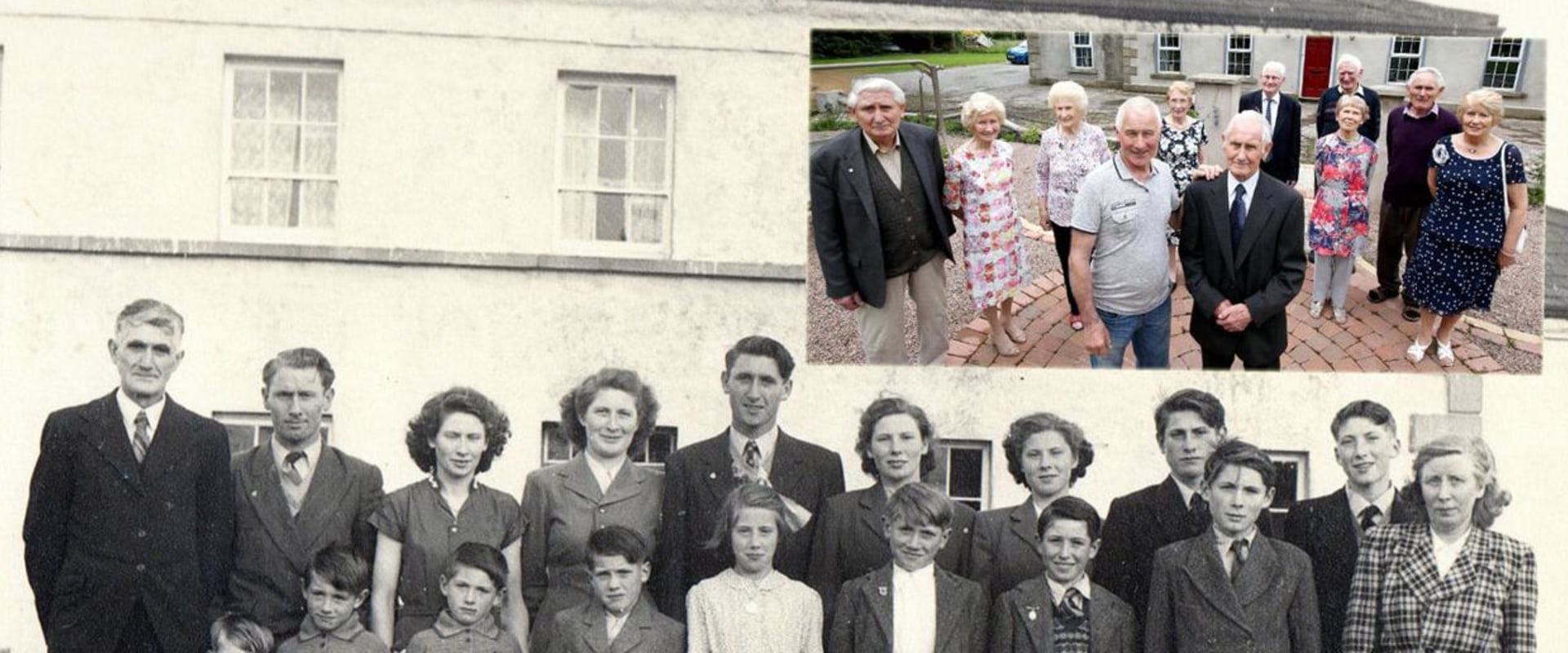
Genealogy, the study of family history and lineages, serves as a fascinating lens through which we can explore our past. It is not merely about names and dates; it is a profound journey into the lives of our ancestors, revealing the intricate tapestry of human connections that shape our identities today. Understanding genealogy allows us to appreciate the rich narratives that define our family histories, offering insights into cultural heritage, migration patterns, and even historical events that have influenced our lineage.The significance of tracing bloodlines extends beyond personal curiosity. It fosters a sense of belonging and continuity, linking us to generations that came before us.
Each family tree is unique, often branching out into diverse paths that reflect the complexities of human relationships. As we delve into our ancestry, we uncover stories of resilience, triumph, and sometimes tragedy, all of which contribute to the legacy we inherit.In this exploration of the longest and oldest bloodlines in the world, we will uncover remarkable families whose histories span centuries or even millennia. These lineages not only highlight the endurance of familial ties but also showcase how certain families have maintained their prominence through various societal changes. From royal dynasties to humble origins, each bloodline tells a story worth telling.As we embark on this journey through time, we invite you to reflect on your own family history.
What stories lie within your ancestry? How do they connect you to the broader narrative of humanity? Join us as we unravel the threads of history woven into the fabric of these extraordinary bloodlines.
The Importance of Genealogy in Understanding Bloodlines
Genealogy serves as a vital tool for individuals seeking to uncover their family histories and understand their cultural heritage. By tracing the intricate web of family trees, one can gain insights into the lives of ancestors, their experiences, and the historical contexts in which they lived. This exploration not only enriches personal identity but also fosters a deeper appreciation for the diverse narratives that shape our societies.One of the primary reasons genealogy is important lies in its ability to connect individuals with their past. Each family tree is a testament to the journeys taken by previous generations, often revealing stories of migration, resilience, and adaptation.For instance, understanding how one’s ancestors navigated historical events such as wars, famines, or social upheavals can provide a profound sense of belonging and continuity.Moreover, genealogy plays a crucial role in preserving cultural heritage. As families document their histories, they contribute to a larger narrative that reflects the values, traditions, and customs of their communities. This preservation is particularly significant in an increasingly globalised world where cultural identities can sometimes become diluted. By engaging with genealogy, individuals can celebrate their unique backgrounds and ensure that the legacies of their forebears are not forgotten.In addition to personal enrichment, genealogy has historical significance.
It allows researchers and historians to piece together the past by providing data that can illuminate broader societal trends. For example, studying family lineages can reveal patterns of migration that inform our understanding of demographic changes over time. Furthermore, genealogical research can aid in identifying connections between different cultures and communities, fostering a sense of unity amidst diversity.Ultimately, genealogy is more than just a hobby; it is a profound journey into the past that connects us to our ancestors and helps us understand our place in the world today. By exploring our family trees, we not only honour those who came before us but also pave the way for future generations to continue this important work.
The Longest Family Trees in History
When exploring the realm of genealogy, few topics capture the imagination quite like the longest family trees in history.These extensive lineages not only provide a glimpse into the past but also highlight the intricate connections that bind generations together. Among the most notable is the lineage of Confucius , which stands as a testament to the enduring legacy of one of history's most influential philosophers.The family tree of Confucius, known as the Kong family lineage, is remarkable for its depth and breadth. Spanning over 80 generations, this lineage boasts more than 2 million descendants worldwide. The roots of this extensive family tree can be traced back to Confucius himself, who lived from 551 to 479 BC.
His teachings have had a profound impact on Chinese culture and philosophy, making his descendants not only numerous but also culturally significant.Documented records of the Kong family lineage began in earnest in 1080 AD, long after Confucius's death. This meticulous record-keeping has allowed for a continuous connection to the past, with descendants actively participating in family reunions and cultural events that celebrate their heritage. The Kong family tree serves as a living history, illustrating how one individual's influence can resonate through millennia.Another fascinating example of a long-standing family tree is that of the British royal family. With roots tracing back to the 9th century, this lineage has played a pivotal role in shaping British history.
The House of Wessex, founded by Alfred the Great, is often regarded as the cornerstone of this royal lineage. Alfred's reign marked significant developments in governance and culture, establishing a legacy that continues to this day.In addition to these prominent examples, there are other historical family trees that have garnered attention for their longevity. The Donnellys , believed to be one of the oldest families in existence, trace their ancestry back over 1,000 years to Viking king Gorm the Elder. Their lineage reflects not only personal histories but also broader societal changes over centuries.As we delve deeper into genealogy, it becomes clear that these long family trees are more than mere records; they are narratives that connect us to our ancestors and illuminate our shared human experience.
Each branch tells a story of survival, adaptation, and continuity, reminding us that our identities are intertwined with those who came before us.
Exploring Ancient Lineages: The Oldest Bloodlines
Throughout history, certain families have managed to maintain their lineage over millennia, creating a rich tapestry of ancestry that connects the past to the present. These oldest bloodlines not only provide insight into historical events but also reflect the cultural and social dynamics of their times.One of the most notable ancient lineages is that of the Japanese Imperial Family , which claims descent from Emperor Jimmu, who is said to have ascended to the throne in 660 BC. This lineage has been meticulously documented through generations, making it one of the oldest continuous hereditary monarchies in the world. The current emperor, Naruhito, embodies this long-standing tradition, participating in numerous cultural and religious ceremonies that reinforce the connection between the past and present.Another remarkable lineage is that of the Kong family , descended from Confucius.This family tree is not only extensive but also deeply rooted in philosophical and educational traditions. The Kong lineage has been preserved through meticulous record-keeping, with over 2 million descendants traced back to Confucius himself. The family’s commitment to maintaining their genealogy reflects a broader cultural emphasis on ancestry and respect for one’s forebears.The Donnelly family , often cited as one of the oldest families in existence, traces its roots back to Gorm the Elder, a Viking king who unified Denmark around 958 AD. This lineage showcases how historical events such as Viking conquests have shaped modern identities and familial connections.
The Donnellys' ability to trace their ancestry back over a millennium highlights the importance of oral traditions and written records in preserving family histories.In addition to these prominent families, there are numerous lesser-known lineages that have survived through time, often through oral histories passed down through generations. These families may not have royal titles or vast wealth, but their stories contribute significantly to our understanding of human history and migration patterns.As we explore these ancient lineages, it becomes clear that genealogy is more than just a collection of names; it is a vital link to our shared past. Each bloodline carries with it tales of triumphs and tribulations, reflecting the resilience of families throughout history. Understanding these connections not only enriches our knowledge of history but also fosters a sense of belonging and identity in an ever-changing world.
Case Study: The Kong Family Lineage
The Kong family lineage is a remarkable testament to the enduring legacy of one of history's most influential figures, Confucius.Born in 551 BC, Confucius not only shaped philosophical thought in ancient China but also established a family line that has persisted for over two millennia. This lineage is not merely a collection of names; it represents a rich tapestry of cultural and historical significance that continues to resonate today.Tracing the genealogy of the Kong family reveals a lineage that spans more than 80 generations, with over 2 million descendants recorded. The meticulous documentation of this family tree began in earnest during the Song Dynasty, around 1080 AD, when Confucius' descendants sought to preserve their heritage. This early record-keeping laid the groundwork for what would become one of the most comprehensive genealogical records in existence.One of the most fascinating aspects of the Kong family lineage is its commitment to maintaining accurate genealogy records.
The Kong family has established a system for periodic updates to their family tree, ensuring that new generations are included and that historical accuracy is preserved. This dedication to genealogy not only honours their ancestor's legacy but also serves as a vital resource for scholars and historians interested in understanding familial connections throughout Chinese history.In addition to its historical significance, the Kong family lineage has played a crucial role in shaping social structures within Chinese society. The descendants of Confucius have often held positions of influence, contributing to various fields such as education, politics, and philosophy. This ongoing impact underscores the importance of genealogy as a means of understanding not just individual identities but also broader societal trends.Today, the Kong family continues to celebrate its heritage through various cultural events and gatherings.
These occasions serve as a reminder of their shared history and the values espoused by Confucius—values that emphasise respect for tradition, education, and moral integrity. As such, the Kong family lineage stands as a living example of how genealogy can connect individuals to their past while simultaneously shaping their future.
Royal Bloodlines: The British Monarchy and Beyond
The British monarchy stands as a testament to the enduring nature of royal bloodlines, with a history that stretches back over a millennium. The roots of this illustrious lineage can be traced to the House of Wessex , which emerged in the 9th century. This dynasty is particularly notable for its most famous monarch, Alfred the Great , who reigned from 871 to 899 AD.Alfred's contributions to the formation of England as a unified entity are monumental, and his legacy continues to influence the monarchy today.Throughout the centuries, the British royal family has undergone numerous transformations, shaped by political alliances, wars, and social changes. The Tudor dynasty , for instance, marked a significant period in English history, with figures like Henry VIII and Elizabeth I redefining the monarchy's role in governance and religion. The tumultuous events of the English Civil War further altered the landscape of royal power, leading to a temporary abolition of the monarchy in the 17th century.In modern times, the British royal family has adapted to changing societal norms while maintaining its historical significance. The current monarch, King Charles III , represents a continuation of this rich heritage, embodying both tradition and contemporary values.
His reign is marked by a commitment to public service and environmental advocacy, reflecting the evolving expectations of royalty in today's world.The genealogy of the British monarchy is not merely a record of names; it is a narrative that intertwines with the very fabric of British identity. Each monarch has played a pivotal role in shaping national consciousness, from ceremonial duties to diplomatic engagements. The royal family serves as a symbol of continuity and stability amidst the ever-changing tides of history.Moreover, royal bloodlines extend beyond Britain’s shores. Many European monarchies share ancestral ties with the British royal family, illustrating how interconnected these lineages are.
For example, Queen Victoria's descendants have spread across various European thrones, earning her the title "the grandmother of Europe." This interconnectedness highlights how genealogy can serve as a bridge between nations and cultures.In conclusion, exploring the genealogy of royal bloodlines like that of the British monarchy reveals not only their historical significance but also their role in shaping national identities. As we delve deeper into these lineages, we uncover stories that resonate through time, reminding us of our shared heritage and collective past.
The Role of DNA in Tracing Ancestry
In recent years, the advent of DNA ancestry testing has transformed the landscape of genealogy research, providing individuals with unprecedented insights into their ancestral roots. This scientific approach to tracing lineage has not only enhanced our understanding of personal heritage but has also illuminated the intricate tapestry of human history.At the heart of this revolution is the field of genetic genealogy , which combines traditional genealogical methods with modern DNA analysis. By examining specific markers in an individual's DNA, researchers can identify genetic connections that may not be evident through conventional records alone.This process often involves comparing an individual's DNA with that of others in a database, revealing potential relatives and shared ancestry.One of the most significant implications of DNA testing is its ability to uncover ancient bloodlines that have long been obscured by time. For instance, many people have discovered unexpected connections to historical figures or ancient civilisations through their genetic profiles. This has led to a resurgence of interest in family history, as individuals seek to understand not just who they are, but where they come from.Moreover, DNA testing can help clarify complex family trees that may have been muddied by adoptions, name changes, or migration patterns. By providing a biological basis for familial connections, DNA can confirm or refute long-held beliefs about ancestry.
For example, a person might believe they are descended from a particular lineage based on family lore, only to find through DNA analysis that their true ancestry lies elsewhere.However, while the benefits of DNA ancestry testing are substantial, it is essential to approach the results with caution. The interpretation of genetic data can be complex and sometimes misleading. Variations in genetic markers can lead to different conclusions about ancestry, and not all tests provide the same level of detail or accuracy. Therefore, it is advisable for individuals to use DNA testing as a complementary tool alongside traditional genealogical research.In conclusion, the integration of DNA analysis into genealogy has opened new avenues for exploring our past.
As technology continues to advance, we can expect even more profound revelations about our ancient bloodlines and the shared history that connects us all.
Challenges in Tracing Ancient Lineages
Tracing ancient lineages presents a myriad of challenges that can complicate the work of genealogists and historians alike. One of the primary obstacles is the historical accuracy of records. Many ancient documents have been lost, destroyed, or altered over time, leading to gaps in the genealogical narrative. For instance, while some royal families maintain meticulous records, the same cannot be said for common folk, whose histories may be less documented.Moreover, the reliability of oral traditions poses another significant challenge.In many cultures, family histories were passed down verbally through generations. While these stories can provide valuable insights, they are often subject to embellishment or distortion over time. This can make it difficult to ascertain the truth behind familial connections.Another issue is the inconsistency in naming conventions. Different cultures have varied practices regarding surnames and given names, which can lead to confusion when tracing lineages across borders.
For example, in some cultures, individuals may change their names upon marriage or due to social status changes, complicating the task of establishing a clear lineage.Additionally, genealogists often encounter language barriers. Historical documents may be written in languages or dialects that are no longer in use or are difficult to translate accurately. This can hinder researchers' ability to interpret vital information about ancestors.Furthermore, the advent of modern technology has introduced its own set of challenges. While DNA testing has revolutionised genealogy by providing new avenues for verification, it also raises questions about privacy and consent.
The interpretation of genetic data can be complex and sometimes leads to unexpected results that may not align with traditional genealogical research.In conclusion, while tracing ancient lineages is a fascinating endeavour that can yield profound insights into our past, it is fraught with challenges that require careful navigation. Genealogists must employ a combination of traditional research methods and modern technology while remaining vigilant about the potential pitfalls associated with historical accuracy and record-keeping.
<strong>Conclusion: The Legacy of Bloodlines</strong>
As we conclude our exploration of the longest and oldest bloodlines in the world, it becomes evident that the significance of genealogy extends far beyond mere names and dates. The intricate tapestry of family history weaves together stories of resilience, triumph, and cultural heritage that shape our identities today.The legacies left by these ancient lineages serve as a reminder of the enduring nature of familial connections. Each bloodline carries with it a wealth of experiences and traditions that have been passed down through generations.Understanding our genealogy legacy not only enriches our personal narratives but also fosters a sense of belonging in an increasingly fragmented world.Moreover, the importance of bloodlines is underscored by their role in preserving cultural practices and values. Families like the British royal family or the Kong lineage exemplify how historical narratives can influence contemporary society. These bloodlines are not just relics of the past; they actively participate in shaping modern culture, politics, and social structures.In addition to cultural significance, tracing one’s family history can have profound implications for personal identity. Many individuals find solace and strength in discovering their roots, which can lead to a greater understanding of their place in the world.
This journey into the past often reveals unexpected connections and shared experiences that resonate deeply within us.Furthermore, as we delve into our genealogical backgrounds, we uncover stories of migration, adaptation, and survival that reflect broader historical movements. These narratives not only highlight individual family journeys but also contribute to a collective understanding of human history.In summary, the exploration of bloodlines is not merely an academic pursuit; it is a vital aspect of our existence that connects us to our ancestors and informs our future. By embracing our genealogical heritage, we honour those who came before us while paving the way for future generations to understand their own identities. The legacy of bloodlines is a powerful testament to the enduring nature of family and the stories that bind us all.